
In renewable energy, the story of innovation often begins not only with technology, but with people. For the Innovation Team at GreenPowerMonitor, a DNV company, the spark behind Energy Data Tagger came from countless conversations with operators and engineers in the field. These were not abstract discussions about data theory — they were real frustrations voiced by teams spending hours reconciling inconsistent signal names just to get a clear picture of performance.
At the same time, the regulatory landscape was shifting. With the EU’s Data Act coming into force in September 2025, the industry faced a new reality: data standardization was no longer optional; it was becoming a legal requirement. For O&M managers, asset owners, and analysts, this meant that the challenge of inconsistent data wasn’t just slowing operations — it was now a compliance risk.
Against this backdrop, the Innovation Team set out to design a renewable plant data software solution that would be both practical for day‑to‑day operations and aligned with the future of regulation. Energy Data Tagger was born not only as a taxonomy tool, but as a bridge between the needs of engineers on the ground and the demands of policymakers shaping the industry’s future.
In this interview, Giuseppe Ferraro and Malcolm Heath of GPM’s Innovation Team share the story behind Energy Data Tagger – from the customer conversations that sparked its creation, to the breakthroughs in natural language processing that underpin it, the product developments on the horizon and the growing role of legislation that looks set to make data standardization mandatory.
Can you tell us more about your professional backgrounds and the background of the Innovation Team which developed Energy Data Tagger?

Malcolm Heath explains, “Giuseppe and I both have a long history in renewable energy, and we’ve been working in the sector for over 15 years each. Giuseppe previously advised on wind turbine design, and on my side I have a background in analyzing wind farm performance. In recent years, we have been part of GPM’s Innovation Team, where we look for new opportunities to help our customers, and then develop cutting-edge solutions for their projects.”
Malcolm continues, “the inspiration for developing Energy Data Tagger came from conversations with our customers, as well as with colleagues. For O&M managers and analysts, there was a recurring challenge: that trying to work with data from multiple sites was complex and troublesome. Signal naming was inconsistent, and it was often incredibly time consuming to locate the data needed.”
Before the tool existed, what were the obstacles in managing and standardizing SCADA signal data across assets?
Giuseppe Ferraro says, “in solar power and battery storage, there are a lot of manufacturers making many different devices that are combined to create a complete system. That’s positive because it has led to healthy competition and rapid advancements; however, it has also brought an element of chaos. The advances have happened so quickly that there hasn’t been time for the industry to develop a standard way of tagging its data, and the same piece of information is often given a different name by different manufacturers.”
Giuseppe adds, “as an example, imagine trying to write software that analyses how much power is being generated in total by all the solar parks in your portfolio. Surely you simply find out how much power is generated by each one, and add them together. However, in reality, the power from one site might be called “AC Power”, in another “Power AC”, in another “Power”, in another just “P”. Your software developer needs to look up the signal name at each site and write it into the code. When you multiply that effort by hundreds, or even thousands of signals that you may want to use in more complicated analyses, you get an idea of the scale of the challenge.”
Can you tell us more about the core technical innovations behind Energy Data Tagger?
Giuseppe tells us, “defining a standard set of names is an obvious solution, but it’s a major task that needs a detailed understanding of how these systems work. We’ve been working on it for two years now, and so far, we have identified and named over 1600 different signals. To do that without any duplication or contradiction has needed extraordinary attention to detail. The result is GPM’s taxonomy: Energy Data Tagger.”
“We of course hope that the whole industry will adopt this taxonomy over time, and everyone will be naming signals in the same standardized way.”
Giuseppe goes on to explain, “a PV site can produce thousands of signals – so we have created Energy Data Tagger to do this mapping task semi-automatically. It uses AI and natural language processing to ‘understand’ a signal’s name, and work out its standardized equivalent. Engineers can then validate the translation and make any changes needed. The great thing is that the tool then learns these corrections, so that it gets them right next time. As we’ve been using this tool, we’ve been able to watch the mapping get more and more accurate – and it’s saving us a huge amount of time.”
What were the breakthroughs and developments that enabled the tool to scale?
Malcolm explains, “The decision to use Energy Data Tagger ourselves was key to making it really sustainable. It’s one thing to define a taxonomy, and another to keep it up to date with technological developments. Our commitment to using it ensures that the tool is constantly tested and growing.”
“The other major breakthrough was developing the automatic mapping tool. That was really challenging to create, but it saves our data engineers hours, sometimes even days, on every new site that we connect to.”
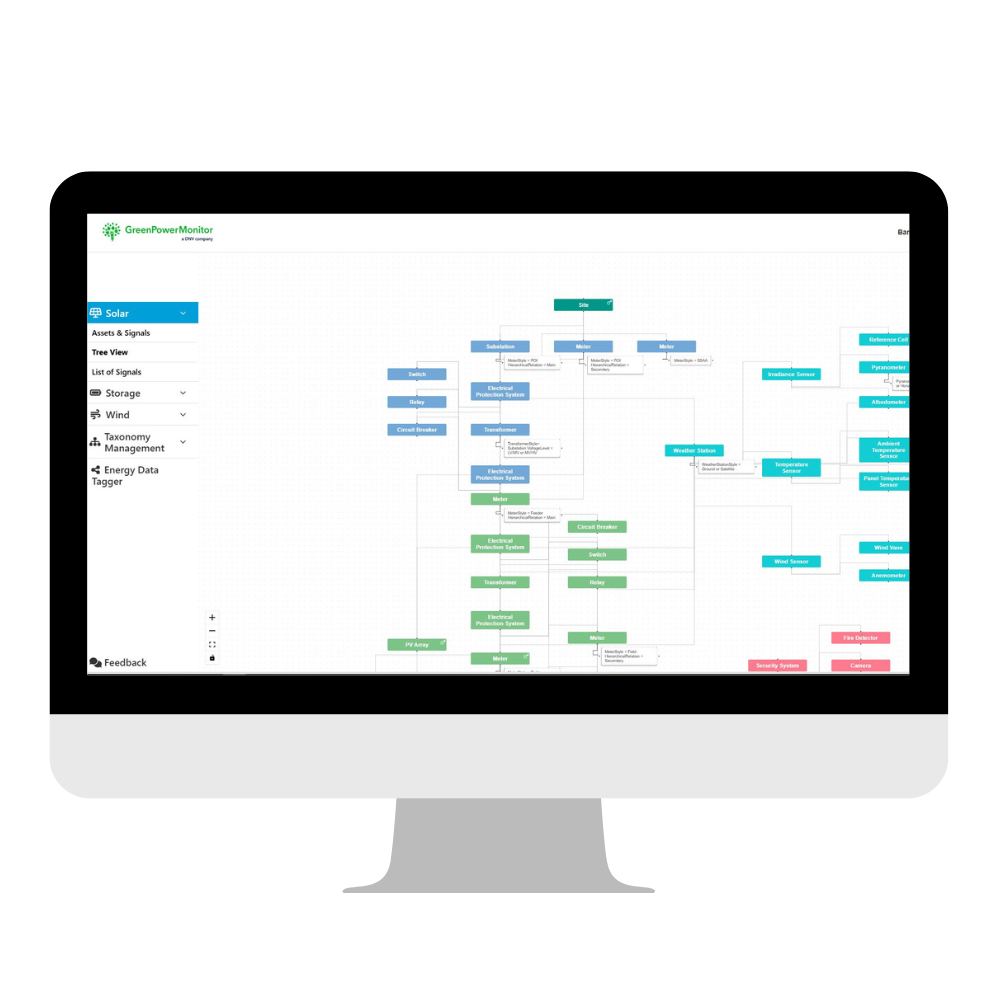
Figure 1: Energy Data Tagger screen
What kinds of benefits are users experiencing from Energy Data Tagger in terms of data quality, analytics, and operational efficiency?
Malcolm says,“firstly, adopting a standard taxonomy has made it much more efficient to develop analytics and to monitor and maintain data quality. Eliminating the confusion in naming not only saves a lot of time, but it also reduces the occurrence of human error.”
“Secondly, the mapping tool saves a huge amount of time. Within GPM, we have seen the tool cut up to 90% off the time it takes to map a PV site.”
Malcolm adds, “lastly, and this was a big surprise to me, it has increased the amount of data that we can work with. Signals with tags that were poorly understood used to be ignored, but now that they have a definition, they are starting to deliver real value.”
How do you see the role of standardized data evolving in the renewable energy sector over the next five years?
Giuseppe tells us, “everyone is waking up to the idea that data is extremely valuable, but in reality, it is only worth something when you know what it means. Having data standardized is absolutely essential, means confidence in reporting to regulators and investors, and opens the door to analysis, and to all the benefits promised by the AI revolution. It even looks like data standardization is going to become mandatory, with legislation such as the EU’s Data Act coming into force.”
“Over the next few years, I expect to see the industry really adopting data standards, and I am confident that our Energy Data Tagger is going to be one of them.”
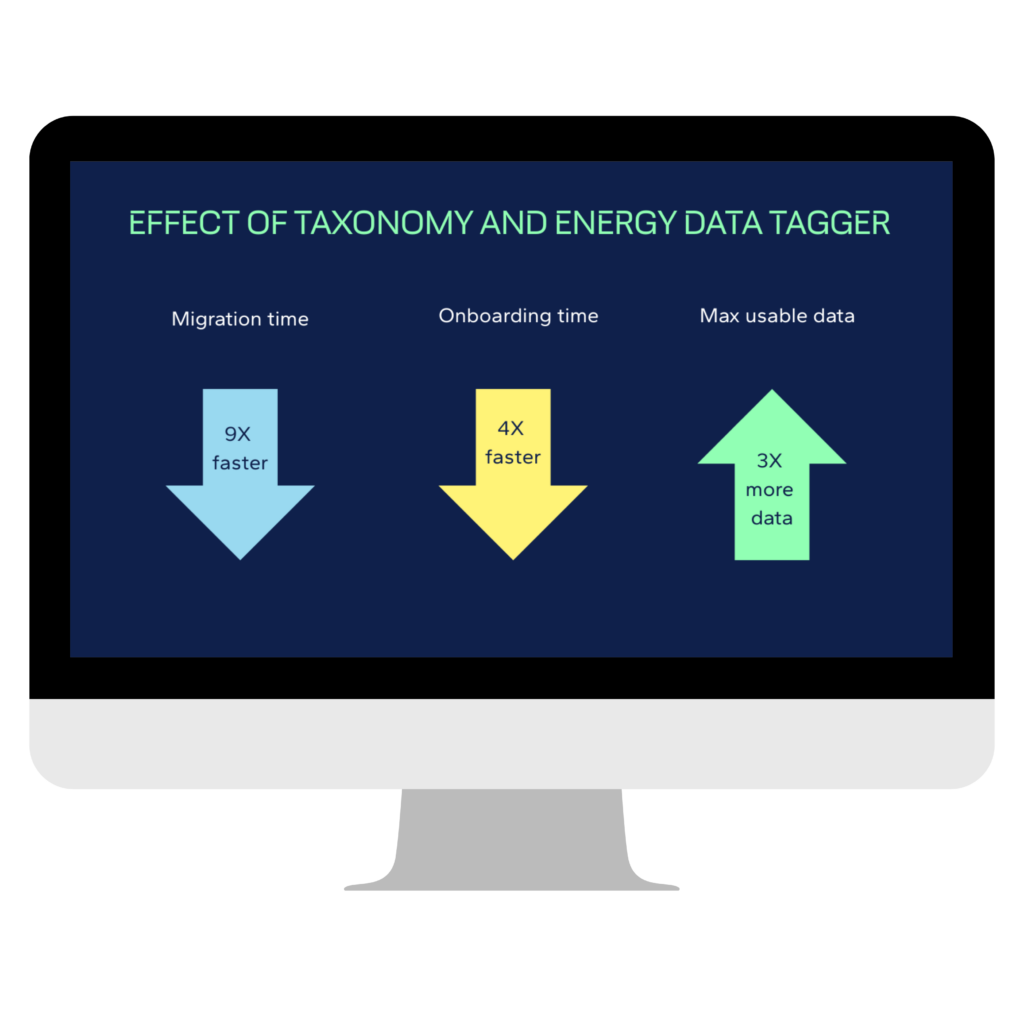
Figure 2: Effect of Energy Data Tagger and Taxonomy
Looking ahead, what’s the future of Energy Data Tagger? Are there new features, markets, or partnerships on the horizon?
Giuseppe talks more about this, “in the team we are working hard to keep developing Energy Data Tagger, as we recognize that continuously advancing our tools and platforms is essential. Right now, the mapping tool is ready for PV and battery storage signals, and we’re training the tool on wind data too. We are also planning to expand Energy Data Tagger to map the names of devices, as well as the names of signals. As the technology evolves, we will keep expanding the taxonomy by adding new tags. Subscribers to the service will get the benefits as soon as they are available.”
Giuseppe concludes, “I’m also really keen as always to hear from our customers, and the capabilities they would like us to develop in the future too.”
Energy Data Tagger is an AI-powered tool that automates signal classification to standardize renewable data. It ensures portfolio-wide data comparability for solar and storage assets, and is backed by the DNV ecosystem.
Energy Data Tagger is aligned with GPM’s on-site products, including GPM SCADA, GPM PPC, and GPM HEMS, and is seamlessly integrated into GPM Horizon for multi-tech portfolios.
Find out more about Energy Data Tagger.
Do you want to book a demo of Energy Data Tagger?
Schedule a meeting with Malcolm Heath for a guided demo of Energy Data Tagger, or simply get in touch to talk with our experts.
