
As North America enters a decisive decade for the energy transition, the region is experiencing changes in electricity demand, driven by increasing electrification, datacentre growth, and an expanding renewable energy pipeline. Recent insights from DNV’s Energy Transition Outlook highlight that datacentres alone could account for at least 5% of total electricity demand by 2030, increasing to 16% by 2040, enhancing the need for flexible and high performing energy systems.
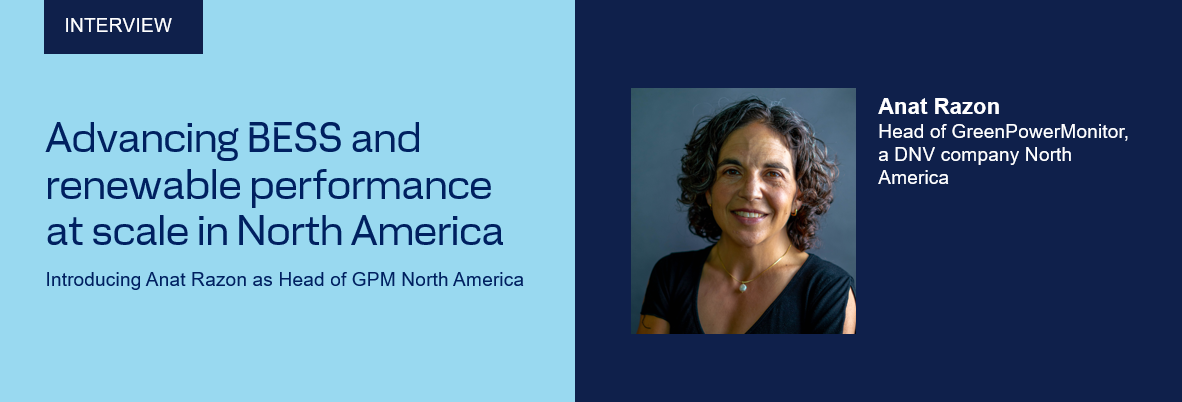
To support these needs, Anat Razon has been appointed as Head of GreenPowerMonitor, a DNV company North America (GPM). With more than 15 years of experience working closely with renewable energy customers, Anat brings a deeply customer focused perspective, extensive technical expertise and a strong understanding of the challenges developers and asset owners face as they scale. In this interview, she shares her views on customer priorities, the technologies influencing the market, and how data-driven solutions can help the industry to build resilient, high performing energy portfolios.

Anat, in your view, what are the biggest challenges and opportunities customers in North America are facing as renewable energy deployment continues to grow?
Customers in North America are navigating change. The biggest challenge at the moment is the rising demand for electricity and the political headwinds that renewables are facing. However, this also creates opportunity, as solar remains one of the lowest-cost sources of new generation, and when paired with battery energy storage, it can help mitigate peak pricing, improve grid resilience, and support greater energy independence. Solar paired with storage isn’t just about adding capacity, it’s also about delivering flexibility and predictable performance.
You’ve worked closely with developers, investors, and asset owners throughout your career at DNV. What have these collaborations taught you about what customers value most in a fast-changing renewable landscape?
Customers value trusted partners who understand both the technical realities of their assets and the commercial pressures they face. Consistency, transparency, and the ability to scale alongside their ambitions are key.
Long-term relationships are built through reliable delivery, proactive communication, and support when challenges arise. Customers want partners who show up, in particular when projects don’t go as planned or when things are difficult.
Customers increasingly manage large, diverse renewable portfolios. How does operating at global scale help GPM deliver the consistency, reliability, and benchmarking needed in North America?
Many of our customers are global and they want to be able to see and manage their portfolio holistically across regions and technology so that they can learn and improve.
When customers evaluate digital monitoring tools, what qualities do they tend to prioritize, in particular regarding accuracy, transparency, and maximizing long-term asset performance?
Customers need confidence in accuracy and transparency – both in the data itself and in how insights are generated.
They also prioritize tools that make their lives easier; integrate legacy assets with new assets and manage their portfolio to improve performance throughout the asset’s life.
Many customers struggle to maintain performance across an asset’s entire lifecycle. From your experience, what are the key touchpoints where digital tools can support them, for example from commissioning to operations and optimization?
The most critical moments are during transitions – such as commissioning, handover, and early operations. This is a particularly stressful time that requires collaboration across many stakeholders such as Utilities, Developers, and EPCs. Making sure that this is done in a smooth and professional way sets up the project for the years to come. Digital tools help establish performance baselines, track deviations, and support proactive optimization.
Project owners place high importance on safety, reliability, and expected performance. How critical is high quality data in helping them meet those expectations?
High-quality data and the insights that go along with it is essential. Without it, risks are harder to detect, and corrective actions are then missed or delayed.
Reliable data helps with proactive risk management, safer operations and of course more predictable performance.
As more customers integrate BESS into their portfolios, what are they telling you about the support they need to operate storage safely, reliably, and profitably?
Customers see storage as essential but complex. They are looking for support in how to maximize value without compromising safety, reliability, or grid compliance.
The Energy Transition Outlook emphasizes the growing need for flexibility solutions like storage as demand rises and renewables expand. From a customer’s perspective, what monitoring or analytical capabilities are becoming essential for BESS assets?
Customers increasingly require visibility into state of health, availability, and performance under different operating scenarios. Therefore advanced analytics that link operations to financial outcomes are becoming more and more important.
Forecasting and scenario analysis are also essential as storage plays a greater role in system flexibility.
Looking ahead, where do you see the biggest opportunities for innovation that could help customers make the best use of BESS and other digital asset management technologies?
The biggest opportunity lies in integrating asset data, market signals, regulations, and operational decision-making into one view.
Turning complex data into clear, actionable insights will be essential as portfolios continue to scale.
DNV is strengthening its presence in North America to be closer to customers. From your perspective, what kinds of local support or engagement do customers value most?
Being close to customers enables faster response, stronger collaboration, and greater trust. It also means understanding local market conditions and challenges and being able to support customers in real time.
Developers and asset owners across the U.S. and Canada are scaling quickly. What do they need most from partners as their fleets become larger and more complex?
They need a partner that can scale with them, and they need a way to view and gain actionable insights from their data and be able to quickly and clearly detect the signals from the noise.
You’ve often spoken about creating a meaningful impact in the energy transition. How does supporting customers in this new role align with that purpose for you?
As renewables become mainstream energy, ensuring projects are safe, reliable, and perform as expected becomes even more important. Giving decision‑makers visibility and actionable insights so they can get the most from their assets also drives my work.
What capabilities or strengths do you want to further develop within the North America team to ensure we stay ahead of market needs in BESS and renewable asset performance?
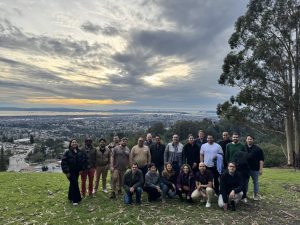
My focus is on building a team that is connected to our global expertise while being able to operate autonomously in North America, particularly in grid integration and IT.
As BESS becomes more prevalent, grid integration will be an essential capability. Building local expertise in these areas allows us to support increasingly complex projects, respond more quickly to grid requirements, and better support customers from commissioning to operations.
Many of our customers are scaling quickly. What ambitions do you have for the North America team to match that pace and deliver consistent, high-quality support across growing portfolios?
My ambition is for the North America team to be a trusted partner to our customers as they scale. That means growing our team alongside them, providing a more holistic way to view and interpret fleet level data, and delivering consistent, high quality support they can rely on.
Do you want to meet us and talk to our renewable energy experts?
For more information on GPM and how we can support your projects in the North America, fill in the form to request a meeting with our renewable energy experts who will be available to answer questions, provide demonstrations, and offer insights on best practices.
